How to Start with Your Trezor Wallet: A Beginner’s Guide
What Is Trezor and Why Use It?
Trezor is a hardware wallet developed by SatoshiLabs that stores your private keys offline — meaning they are not exposed to your internet‑connected device. This dramatically reduces the risk of hacks, malware, and phishing attacks.
Trusted by thousands of users worldwide, Trezor supports hundreds of coins and tokens, including Bitcoin (BTC), Ethereum (ETH), Litecoin (LTC), and many ERC‑20 tokens. If you want to manage your crypto with the highest security standard, a Trezor hardware wallet is one of the best places to start.
Learn more at the official Trezor homepage: https://trezor.io
Step 1: Unbox and Inspect Your Trezor Device
Before powering up your device for the first time:
- Check the packaging. Official Trezor devices come in sealed retail packaging.
- Verify authenticity. Look for tamper‑evident seals and compare with manufacturer photos.
- Locate the USB cable. You’ll need it to connect Trezor to your computer or mobile device.
Always start with a genuine device purchased from an authorized vendor. Counterfeit or tampered devices may compromise your cryptocurrency security.
Official purchase resources:
🔗 Order directly from Trezor: https://trezor.io/store
Step 2: Visit the Official Trezor Start Page
To configure your device and initialize your wallet, visit the official Trezor start page:
🔗 Trezor Start: https://trezor.io/start
This is the official setup portal maintained by the manufacturer. It will walk you step by step through initializing your device, installing firmware, and generating your recovery seed.
Why This Link Matters
Only use trezor.io/start for firmware installation and wallet initialization. Using unofficial third‑party pages can lead to phishing attacks and stolen funds.
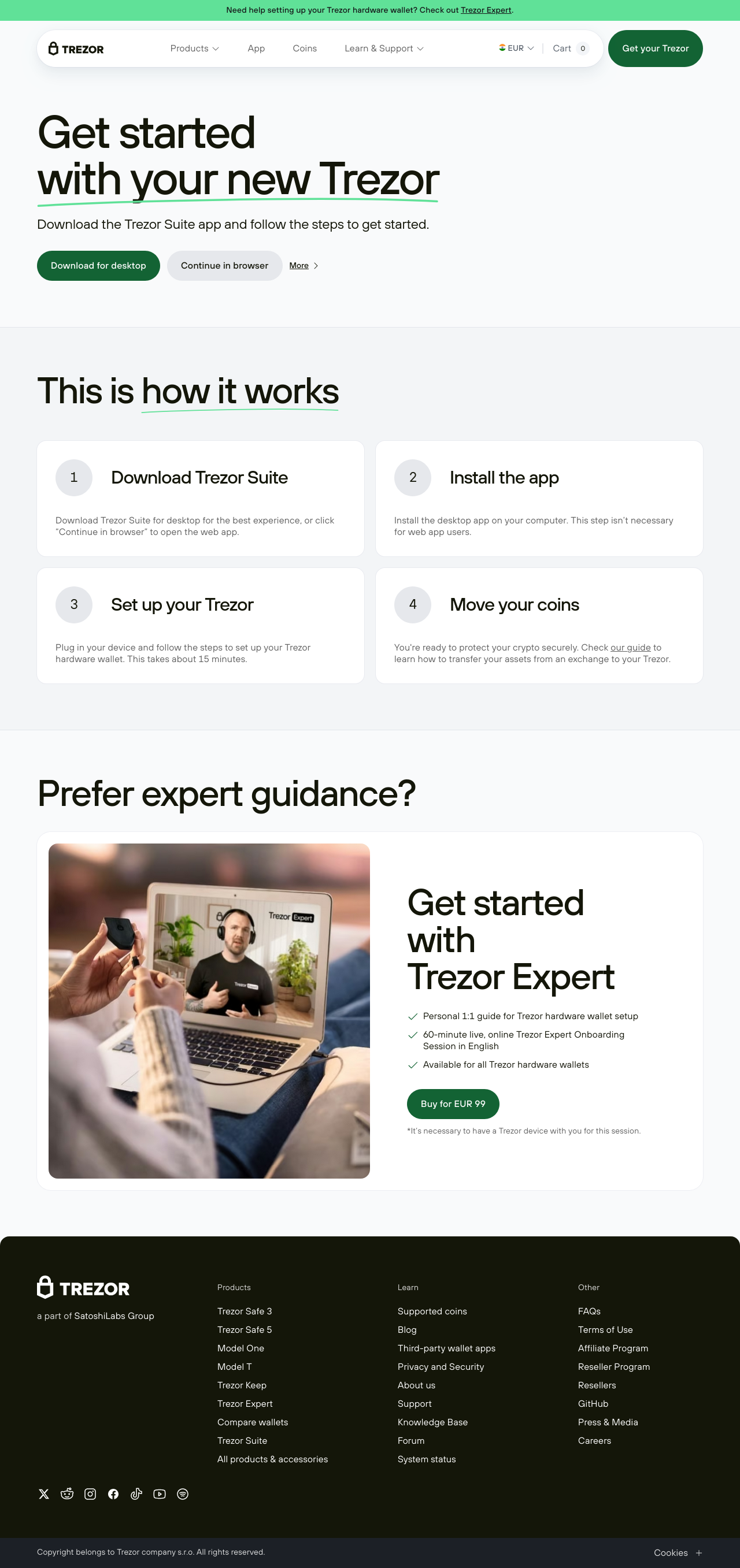
Step 3: Install Trezor Suite
Trezor Suite is the official desktop and web app for managing your Trezor wallet. It allows you to:
- View account balances
- Send and receive crypto
- Manage supported coins and tokens
- Update firmware securely
Official download page:
🔗 Trezor Suite Downloads: https://suite.trezor.io
Choose the version appropriate for your operating system (Windows, macOS, Linux) or use the web version straight from your browser.
Step 4: Initialize Your Device
When you start your Trezor for the first time, you’ll be prompted to:
- Set a PIN code. This protects access to your wallet.
- Generate your recovery seed. This is a list of 12–24 words used to restore access to your funds if your device is lost or damaged.
⚠️ Do not take screenshots of your recovery seed. Never type it into a computer or phone. Write it down and store it offline.
Step 5: Secure Your Recovery Seed
Your recovery seed is the most important part of your cryptocurrency security. Follow these best practices:
- Write it on paper or use a metal backup plate
- Store multiple copies in separate secure locations
- Do not store it digitally (no screenshots, no cloud storage)
For guidance on best practices, you can review reputable security articles like those on Ledger Academy or Coinbase Learn (both rank highly in crypto security guidance):
🔗 Ledger Academy – Crypto Security Tips
https://www.ledger.com/academy
🔗 Coinbase Learn – How to Secure Crypto
https://www.coinbase.com/learn
Step 6: Add Coins and Start Transacting
Once your Trezor is initialized, you can add accounts for supported cryptocurrencies in Trezor Suite.
Popular assets supported include:
- Bitcoin (BTC)
- Ethereum (ETH)
- Litecoin (LTC)
- Bitcoin Cash (BCH)
- ERC‑20 tokens
To send or receive crypto:
- Go to the account dashboard in Trezor Suite.
- Select Receive to view your wallet address.
- Select Send when you’re ready to transfer funds.
Always double‑check addresses when sending crypto. Hardware wallets like Trezor help ensure your transactions are secure and less prone to malware tampering.
Official Support and Help Resources
If you run into issues during setup, Trezor provides official documentation and support resources:
🔗 Trezor Support Center: https://help.trezor.io
🔗 Trezor Knowledge Base: https://wiki.trezor.io
These official help pages rank highly in search engines and are trusted sources of troubleshooting advice.
Final Tips: Stay Safe, Stay Updated
Security is ongoing. Here are some final safety tips:
- Always keep your firmware and Trezor Suite up to date.
- Only interact with official Trezor websites and apps.
- Beware phishing emails pretending to be Trezor support.
- Never share your recovery seed with anyone.
By following this guide and linking to official, high‑authority resources, you ensure you are starting your Trezor wallet the right way — with security, clarity, and confidence.